Human Design Worksheets
Beginner’s Course Resources
-
![]()
Gates & Channels
-
![]()
Fill Out Your Personal Chart
-
![]()
Get to Know Your HD Chart
-
![]()
Practice Recognizing Planet Glyphs
-
![]()
9 Centers WS
-
![]()
Worksheet - Centers
Human Design Worksheet
Fill this out during class or while reading your chart. Use the Save button so you can come back later on the same device.
1) Basics
Tip: If you are missing something, write “unknown” and keep going. The goal is clarity, not perfection.
2) Core Design
3) Centers
4) Channels and Gates
5) Your Experiment
6) Class Notes
Human Design Worksheet: Session 1 (Foundations)
This version is built for your first class. It focuses on vocabulary, chart basics, and a simple plan for how to start testing Strategy and Authority in real life.
1) Student + Chart Info
Session 1 focus
2) What Human Design Is (Your Words)
3) Your Core Design Snapshot
Quick check-in
4) Beginner Vocabulary
5) Centers: What Feels Consistent vs. Influenced
Optional prompt for students
6) Your First Experiment (Session 1 Homework)
7) Notes From Session 1
Human Design Beginners | Class Two
1) Student Info and Chart Basics
Save to device enabledYour profile is two numbers, like 4/6. The first number is the conscious line (how you think you show up). The second number is the unconscious line (how others experience you without you trying).
3) Conscious vs Unconscious Lines
First number vs second number4) Your Profile Combination
Blend the two linesStart with the first line as your conscious approach. Then add the second line as the background pattern that people notice. Your profile is not a label. It is a pattern you can observe and refine through experimentation.
Researching, preparing, learning, creating stability before action.
Solitude, quiet time, privacy, waiting for the right call outward.
Learning through experience, adaptation, and honest feedback loops.
Opportunities through people, community, and consistent bonds.
Others expect you to fix, lead, save, or provide an answer.
Life stages, perspective shifts, and embodying what you learned.
5) Practice: Profile Reading Lab
Partner or group activity| Prompt | Your notes |
|---|---|
| What does the conscious line look like in daily life | |
| What does the unconscious line look like from the outside | |
| Where do projections show up, if line 5 is involved | |
| What is their best environment for thriving | |
| One experiment to try this week |
Tip: Keep your notes observational. You are not diagnosing or boxing anyone in. You are tracking patterns.
6) Integration and Homework
Take it into real lifeHuman Design Beginner Series · Class Two Worksheet
Focus: Profiles, Mandala basics, and BodyGraph foundations. Save your answers on-device and print to PDF when finished.
1) Student and Chart Snapshot
2) Strategy and Authority
3) Profile Lines Reference and Reflection
4) Mandala and Gate Practice
| Gate | Line | Center or Channel | How it shows up for me |
|---|---|---|---|
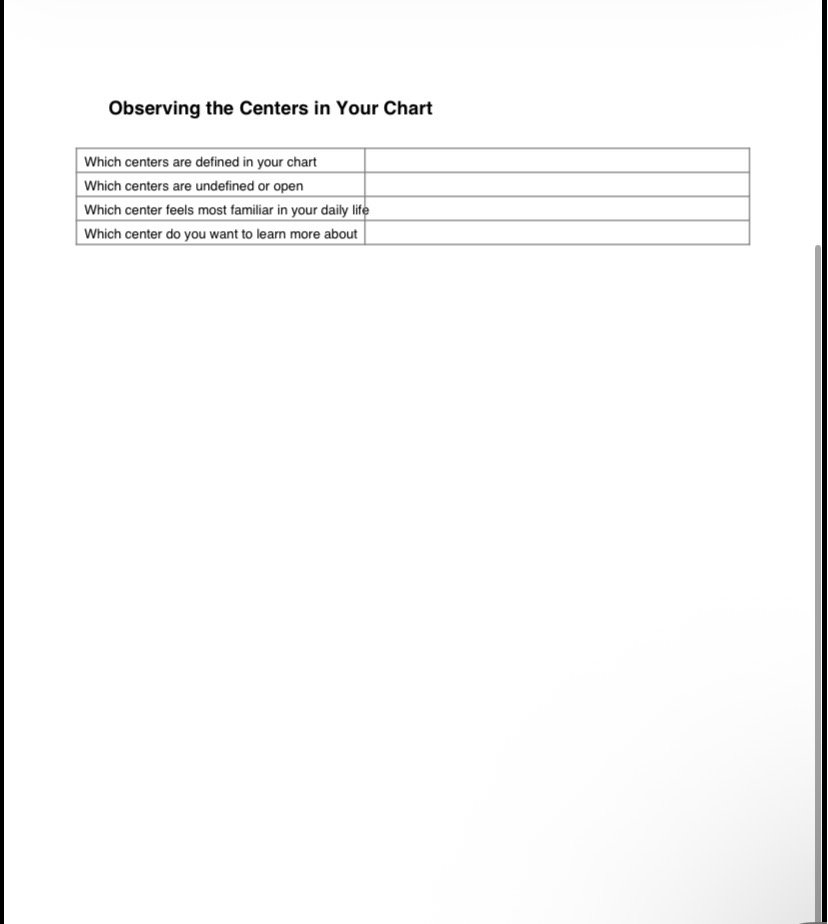
5) Centers Check: Defined vs Open
6) Practice Loop for the Week
Human Design Class 3 Worksheet
Gates, Channels, Hanging Gates, Authority, and tying it all together with Type, Profile, and Definition
Student and chart setup
Class 3 quick goals
Part 1: Activated gates and lines
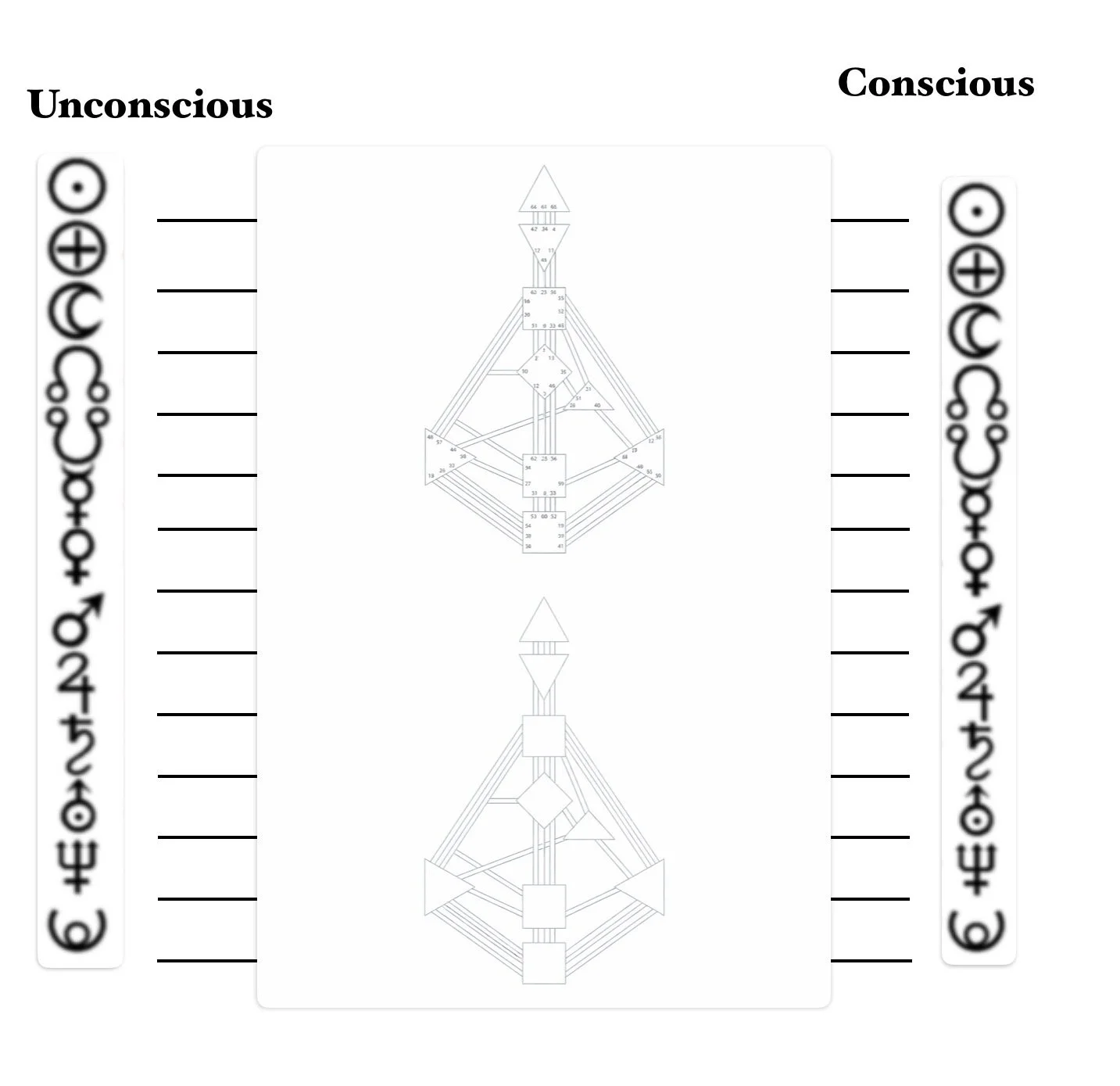
Step 1: Find the gate and line for each planet in your chart readout. Step 2: Copy them here so you can see patterns fast.
| Planet | Personality gate | P line | Design gate | D line | Notes, what I notice in real life |
|---|---|---|---|---|---|
| Sun | |||||
| Earth | |||||
| North Node | |||||
| South Node | |||||
| Moon | |||||
| Mercury | |||||
| Venus | |||||
| Mars | |||||
| Jupiter | |||||
| Saturn | |||||
| Uranus | |||||
| Neptune | |||||
| Pluto |
Quick check
Gates are activated when a planet lands there.
Channels are defined only when both gates at the ends are activated.
My top 3 repeating gate themes
Part 2: Channels, centers, and definition
Channels connect two centers. A defined channel creates consistent energy and contributes to which centers are defined.
| Defined channel (gate to gate) | Centers connected | What stays consistent for me | Supportive when | Gets rigid when |
|---|---|---|---|---|
Defined and undefined centers
Defined centers tend to feel stable and self generated.
Undefined centers tend to learn through experience, people, and environment.
My center map
Tie in Type
Types describe how your aura interacts with life. Definition and channels show what is consistent inside that aura.
Tie in Profile
Profiles describe how you move through experience. Defined and undefined centers show where that learning stabilizes or stays open.
Part 3: Hanging gates and relationship chemistry
A hanging gate is an activated gate that does not complete a full channel. Hanging gates can feel like magnets toward the matching gate in other people.
| Hanging gate | Center | What I feel pulled toward | Matching gate that completes it | Who or what activates it |
|---|---|---|---|---|
Electromagnetic channel prompt
Defined and undefined in relationships
Defined energy often sets the pace and tone in that area.
Undefined energy often amplifies and learns, so boundaries and awareness matter.
Part 4: Authority and how it ties into gates and channels
Authority is your reliable decision making process. It is supported by your definition, and often expressed through consistent channel themes.
My Authority
Authority support map
| Decision situation | What my Authority requires | Which gate or channel shows up here | My experiment for next time |
|---|---|---|---|
Type, Strategy, Authority connection
Strategy is how you engage life. Authority is how you decide once life gives you something to engage.
Where definition matters
Part 5: Gate deep dive
Pick three gates that feel most active in your life right now. Use real examples and keep it simple.
Gate 1
Gate 2
Gate 3
Part 6: Learning styles by elements
Use your astrology Sun sign element as a starting point. Then choose what actually works for you, most people are a mix.
| Element | How it learns best | Study tools that match | Circle |
|---|---|---|---|
| Fire | Momentum and action | Short videos, quick examples, mini challenges | |
| Air | Conversation and perspective | Podcasts, discussion, Q and A, voice notes | |
| Water | Story and reflection | Journaling prompts, tracking patterns over time | |
| Earth | Structure and repetition | Worksheets, checklists, highlighting and mapping |
My top study modes
My study plan for this week
Part 7: 7 day observation log
Track one gate, one channel, or one hanging gate for a week. Notice what activates it and what choice you make when it shows up.
| Day | Date | What I noticed | Trigger or activation | Choice or experiment | Quick note |
|---|---|---|---|---|---|
| 1 | |||||
| 2 | |||||
| 3 | |||||
| 4 | |||||
| 5 | |||||
| 6 | |||||
| 7 |
Questions for next class
Wrap up

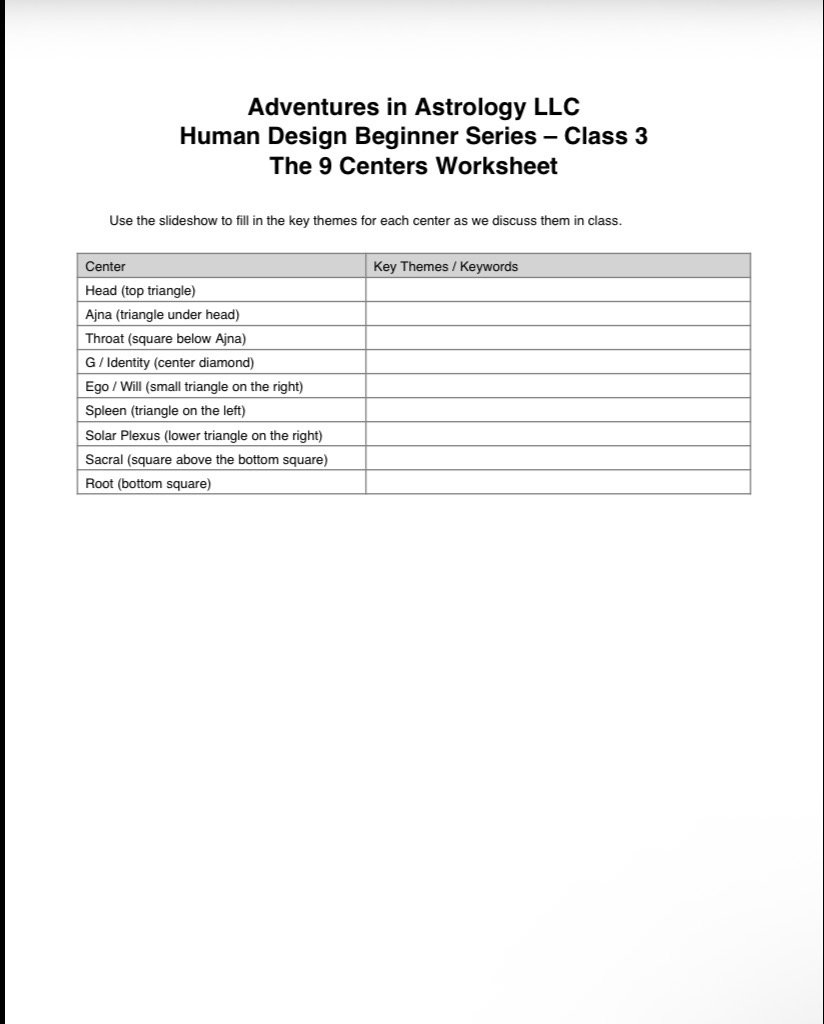
Adventures in Astrology LLC
Human Design Beginner Series Class 3
The 9 Centers Worksheet
Instructions: Use the class lesson and slideshow to label the 9 centers and write down the main meanings of each one.
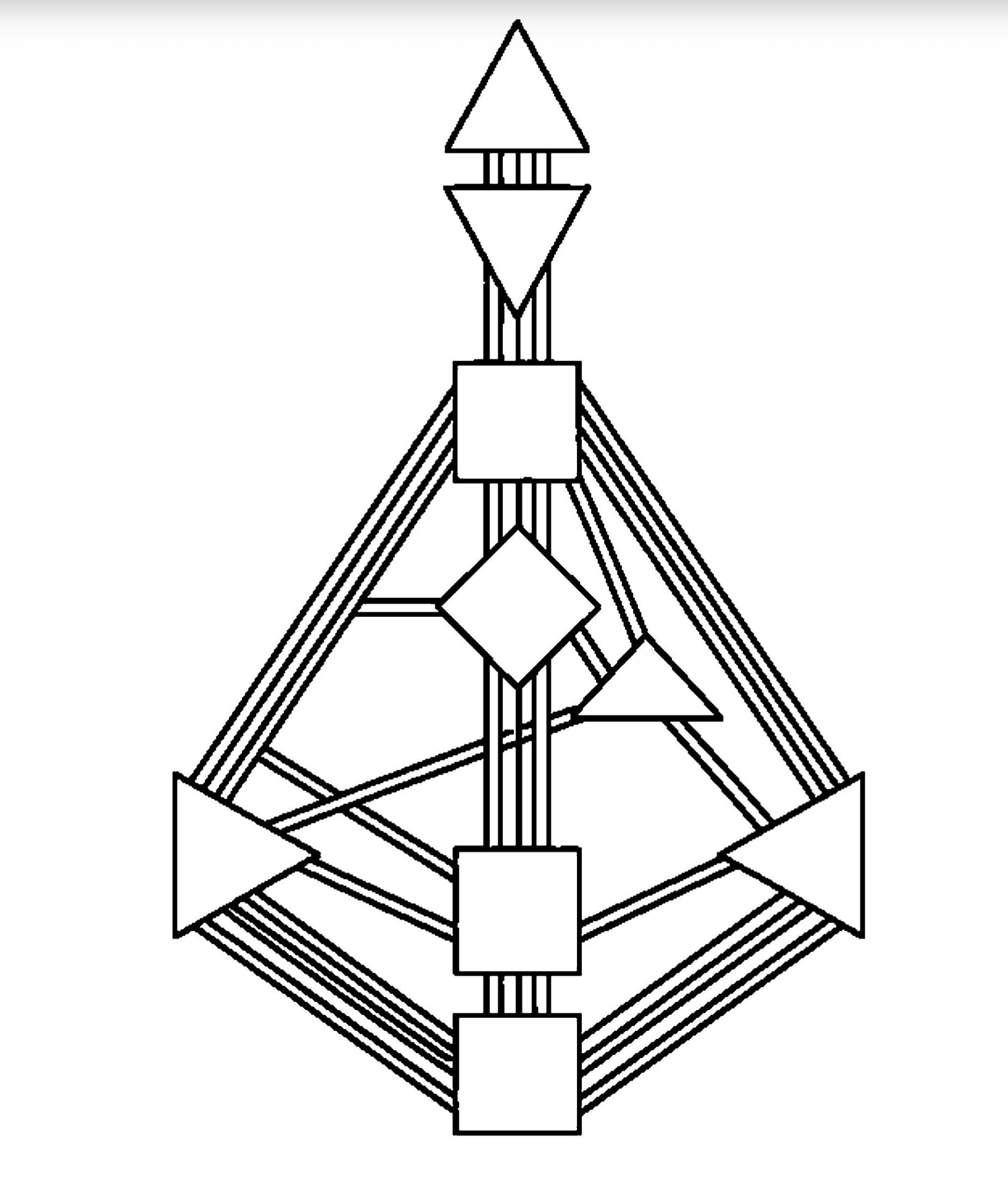
Part 1. Label the 9 Centers by Location
Part 2. Fill in the Key Meanings
Part 3. Defined and Undefined
Part 4. Reflection
Adventures in Astrology LLC
Human Design Beginner Series
Version 2 • Interactive Bodygraph Worksheet for Gates, Channels, Definition, and Center Lookup
This Class 4 study page is built around your slideshow flow on chart basics, Human Design vocab, channels, hanging gates, definition, and gate study. Students can click the bodygraph map, reveal center gate groups, practice matching definitions, sort keywords, and save notes as they learn. :contentReference[oaicite:1]{index=1}
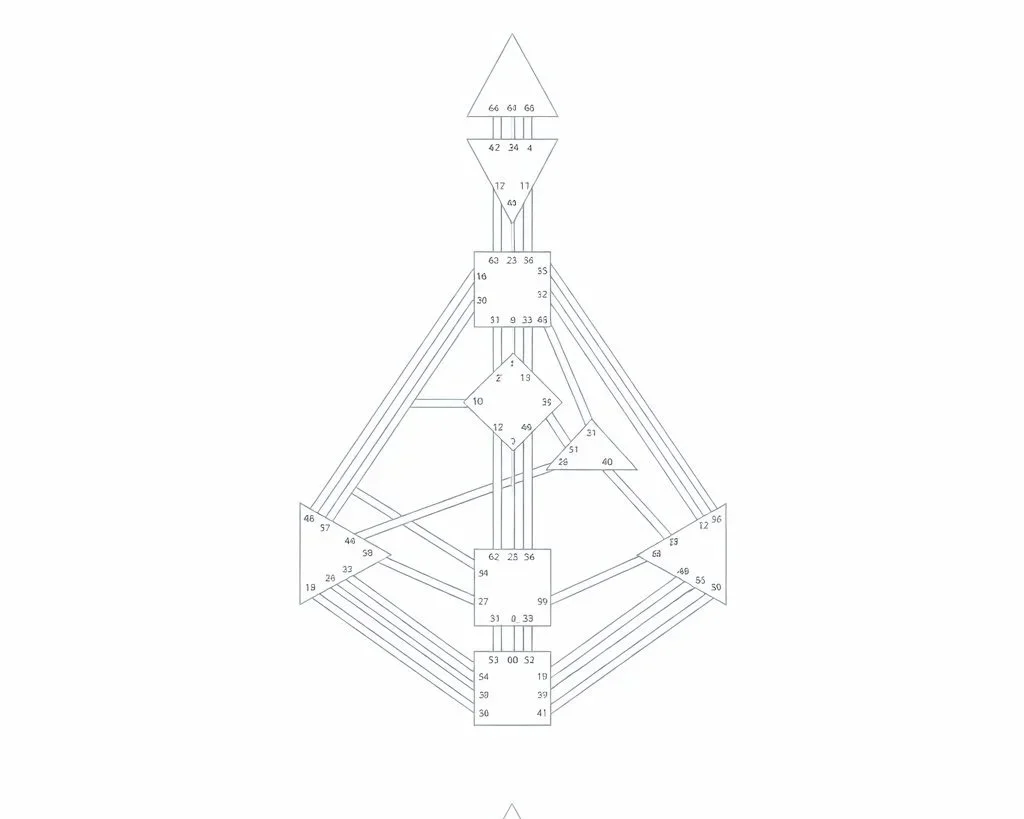
Clickable bodygraph map
Click a center to reveal its gate group and meaning. Click a channel line to reveal what that connection teaches. This gives students a visual guide while staying grounded in your Class 4 concepts.
Worksheet 1 • Match the term to the right definition
This mirrors your Class 4 vocab slides on gate, channel, hanging gate, definition, conditioning, and the split types.
Worksheet 2 • Sort keywords to the right concept
Click a term first, then click the keywords that belong with it. This helps students hear how the language of each concept sounds.
Keyword bank
Study panel
This panel updates when students click the bodygraph map or a center button below.
Start here
Your slideshow teaches that gates are the individual points inside centers, channels are full connections, and definition shows how the chart is wired together. Click a center or channel on the map to study visually. :contentReference[oaicite:2]{index=2}
Trail practice and location station
This is built from your Week 4 trail practice and location station slides. :contentReference[oaicite:3]{index=3}
How to study a gate
- Ask what the gate means
- Ask what gift it offers
- Ask what lesson it carries
- Notice which center it lives in
- Check whether it forms a full channel or stays hanging
Location station checklist
Class notes
Write one keyword for each defined channel theme you notice repeating in your life. Then notice one interaction this week where a hanging gate felt completed and what shifted.
Searchable glossary and teacher notes
Suggested teaching flow
- Start with the bodygraph map and point out the nine centers first
- Define gate, channel, hanging gate, definition, and conditioning before doing activities
- Use the matching section as quick recall
- Use the center lookup so students can place their personal gates inside the chart
- End with trail practice and their own notes
Class reminders from your slides
- Start with the number before the decimal. If students see 57.2, begin with Gate 57
- Black gates are usually easier to recognize consciously. Red gates may be noticed by others first
- Begin with Personality Sun and Earth and Design Sun and Earth
- Students do not need all 64 gates at once. Personal study first is enough